Air fryer food safety: what the agencies actually say
Applies to: United States
Air fryer food safety comes down to one thing the cooking charts leave out. The US Centers for Disease Control asked about 4,200 people how they cook frozen breaded stuffed chicken. Nearly a third said they use an air fryer. Those products contain raw poultry, and the CDC found air fryers heat them unevenly. Almost nobody writing about air fryer cooking times mentions this.
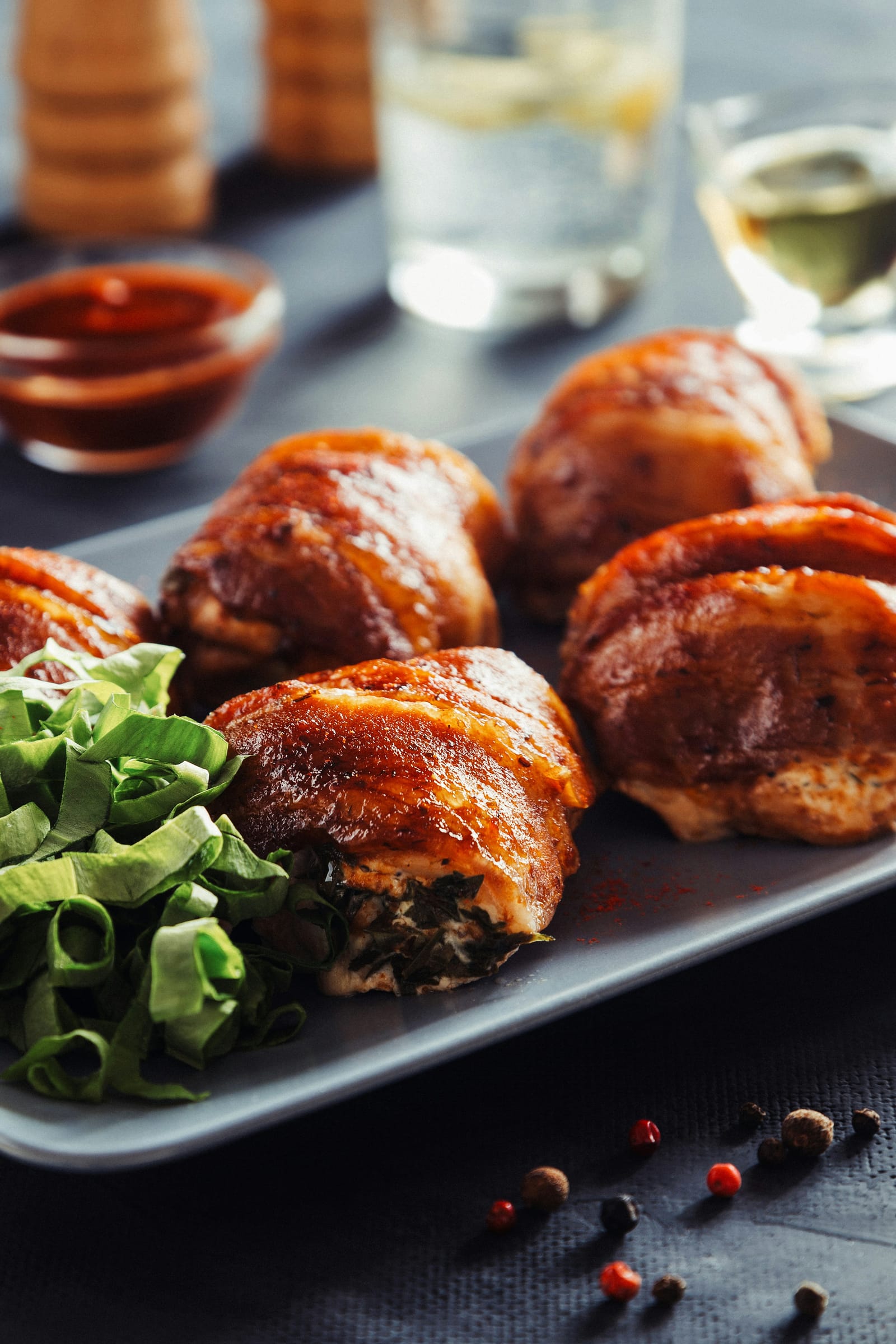
Key takeaways
- Air fryers are fine. Nothing in the official guidance discourages them.
- One product is the exception: raw frozen breaded stuffed chicken should not be cooked in an air fryer, according to both the USDA and the CDC.
- Consumer Reports tested more than 80 models and found some running 67°F below their own set temperature. That is why time charts cannot govern safety.
- The safe internal temperatures do not change with your model: 74°C for poultry, 71°C for mince, 63°C for whole cuts and fish - and whole cuts need a three minute rest at that temperature before carving, which the USDA treats as part of the requirement rather than a serving suggestion.
- The famous "reduce 25 degrees, cut time 20 percent" rule is a convention. Only one manufacturer publishes both halves of it.
What did the CDC actually find?
In a report published on 2 December 2022, the CDC looked at how people cook frozen stuffed chicken products. The kind sold as cordon bleu or chicken kiev, breaded and shaped and sitting in the freezer aisle.
They surveyed roughly 4,200 US adults. More than half used something other than, or in addition to, an oven. Air fryers came top at 29.7 percent, microwaves close behind at 29 percent, toaster ovens at 13.7 percent.
The CDC's finding was blunt: microwaves, air fryers and toaster ovens heat these products inconsistently. Its advice is that you should never use a microwave or an air fryer to cook raw frozen breaded stuffed chicken.
The reason is that the products are only partly cooked. The breading is set, which makes them look ready to reheat, but the chicken inside is raw and has to reach 74°C. An appliance that browns the outside quickly can leave the middle short of that.
Two agencies have looked at the outbreak history and they count it slightly differently, which is worth stating rather than smoothing over. The CDC counts 11 salmonella outbreaks linked to these products between 1998 and 2022, with 187 illnesses and 42 hospitalisations. The USDA's food safety service counts 14 since 1998. Neither figure is wrong; they are drawn on different boundaries.
Why can a cooking time chart not keep you safe?
Because the charts assume your air fryer runs at the temperature on the dial, and a lot of them do not.
Consumer Reports has tested more than 80 air fryers. Set to 350°F, some models registered anywhere from 67 degrees below to 25 degrees above that. Only twenty of the eighty five they tested landed within five degrees of the target.
That is not a small discrepancy. A model running 67 degrees cool will leave chicken well short of a safe temperature at the time a chart says it should be done, and nothing about the food will look wrong.
This is also why published cooking times for the same food differ between sources by 40 or 50 degrees. The sources are not being careless. They are describing different machines.
The USDA puts it in one line worth remembering: each air fryer will have varying cooking times, but the safe internal temperature is always the same.
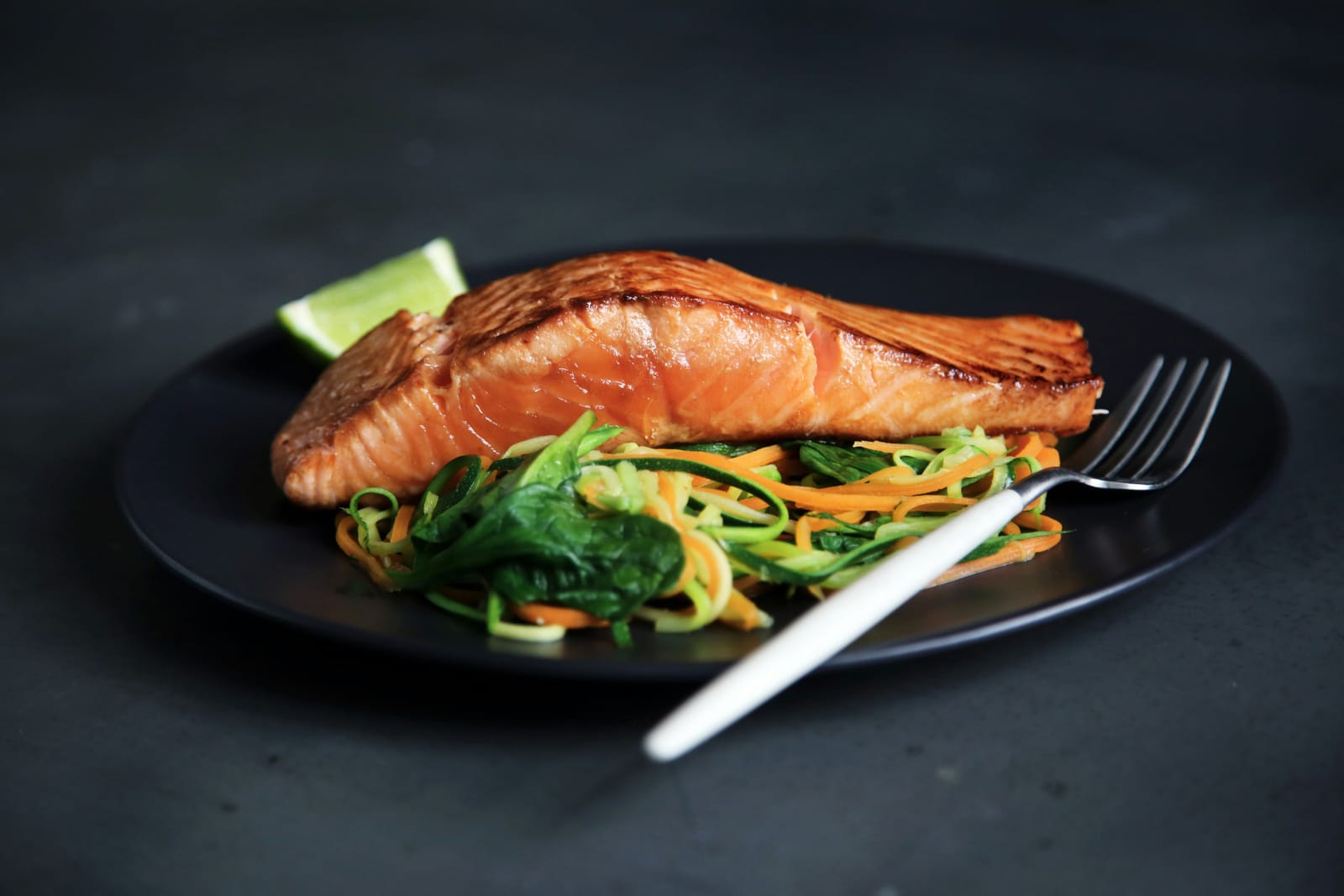
What temperatures does food actually need to reach?
These are the published minimums. They are the one part of this subject that is not a convention, a starting point or a rule of thumb.
| Food | Safe internal temperature | Authority |
|---|---|---|
| Poultry, all cuts and ground | 74°C / 165°F | USDA |
| Ground beef, pork, lamb, veal | 71°C / 160°F | USDA |
| Whole cuts of beef, pork, lamb | 63°C / 145°F + 3 min rest | USDA |
| Fish | 63°C / 145°F | USDA |
| Leftovers and reheated dishes | 74°C / 165°F | USDA |
| General minimum, UK | 70°C for 2 minutes | Food Standards Agency |
| High risk foods, Australia and NZ | 75°C in the centre | Food Standards ANZ |
The UK figure has equivalents that trade time against heat. Sixty degrees for 45 minutes, 65 for 10 minutes, 70 for two minutes, 75 for 30 seconds, 80 for six seconds. Any of them will do.
The USDA is also explicit that colour is not a doneness test, which matters more in an air fryer than an oven because the circulating air browns the outside faster.
Two practical things from the same guidance
Do not overfill the basket. Crowded food cooks unevenly and leaves cold spots, and the USDA names this specifically.
Cook in batches instead of packing more in. Which? found an air fryer used about half the energy of an oven on a roast chicken, 0.54 kilowatt hours against 1.157. But their science team lead noted the savings drop off sharply once you have to cook in batches. So batching costs you the energy advantage and protects the safety one. That is a trade worth making.
Where does the 25 degree conversion rule come from?
Less authority than its repetition suggests. We checked what the manufacturers themselves publish.
| Brand | What it publishes |
|---|---|
| Cuisinart | Both halves: about 25°F lower, about 20 percent less time |
| Ninja | Temperature only. No time figure, just check food frequently |
| Cosori | Says to reduce both, publishes per-food charts rather than a formula |
| Instant, Philips, Tefal, Breville | No numeric conversion rule at all |
So one brand out of seven publishes the rule everyone quotes. It looks like a carry-over of the older convection oven rule, which has been around far longer, and no test kitchen appears to have published a methodology behind the 20 percent.
It is still a reasonable starting point. It is just not a tested standard, and a page that presents it as one is telling you something it cannot support.
There is a related nuance almost every guide misses. If your recipe was written for a fan or convection oven, most of the adjustment has already been made, so the further reduction should be much smaller. British and Australian recipes are usually written in fan temperatures. American ones usually are not.
Oven to air fryer conversion chart and calculator → The conversion for both fan and conventional ovens, cooking times for common foods, and the safe temperatures alongside them.
Is acrylamide worth worrying about?
Worth knowing about rather than worrying about, and the advice is simple enough to follow without thinking.
Acrylamide forms in starchy foods cooked above about 120°C, which covers most of what goes in an air fryer. The European Food Safety Authority concluded in 2015 that it is a genotoxic carcinogen and reaffirmed that position in 2022.
The UK Food Standards Agency advice is to aim for a golden yellow colour or lighter when frying, baking, toasting or roasting starchy foods, rather than a deep brown. Their other tip is not to keep raw potatoes in the fridge if you plan to roast or fry them, because the cold raises the sugars that form acrylamide.
No agency singles out air fryers here. This is general starchy food guidance that happens to apply.
So should you use an air fryer?
Yes. None of the above is an argument against them, and the energy figures are genuinely good for single batches.
The narrow point is that an air fryer is less predictable than an oven, and cooking charts are written as though it is not. A chart gets you to roughly the right place. A thermometer tells you whether you have arrived.
A probe thermometer costs about the price of two takeaways and removes the entire problem.
Common questions
Yes. Nothing in the official guidance discourages air fryers. What the agencies say is narrower: an air fryer cannot be relied on to reach a safe internal temperature by time alone, so check with a thermometer. There is also one specific product they say to avoid cooking in one, covered below.
Because air fryers vary more than the charts admit. Consumer Reports tested 83 models against a 350F setting and found them ranging from 67 degrees below to 25 degrees above, with only 22 landing within 5 degrees of the target. A chart tells you roughly when to start checking. Only a thermometer tells you when the food is done.
Raw frozen breaded stuffed chicken, the shop-bought kind sold as cordon bleu or chicken kiev. The US Department of Agriculture states plainly that these should not be cooked in an air fryer, and the CDC reached the same conclusion after investigating salmonella outbreaks. The breading is cooked, the chicken inside is not.
Seventy four degrees Celsius, or 165 Fahrenheit, measured in the thickest part. That is the USDA figure and it applies to all poultry including ground. The UK Food Standards Agency works to 70 degrees Celsius held for two minutes, and Food Standards Australia New Zealand uses 75 degrees for high risk foods.
Only partly. Cuisinart publishes both halves of it. Ninja publishes the temperature reduction and gives no time figure. Instant, Philips, Tefal and Breville publish no numeric conversion rule at all. It is a useful convention rather than a tested standard, and it appears to be a carry-over of the older convection oven rule.
It is worth knowing about rather than worrying about. Acrylamide forms in starchy foods cooked above about 120 degrees Celsius. The UK Food Standards Agency advice is to aim for golden yellow rather than deep brown when cooking chips, potatoes and bread. No agency singles out air fryers; it is general guidance that happens to apply.
Mojo takeaway
Air fryers are fine. Time charts are useful. Neither can tell you food is safe, because Consumer Reports found models running 67 degrees below their own setting, and no chart knows which one you own.
Two things worth carrying: raw frozen breaded stuffed chicken belongs in a conventional oven, and 74 degrees for poultry does not change no matter what the dial says.
Sources
Primary sources throughout. Checked August 2026. Cooking guidance changes, so confirm against the current version before relying on it.
- US Centers for Disease Control and Prevention, Appliances Used by Consumers to Prepare Frozen Stuffed Chicken Products, United States, May to July 2022, MMWR 71(48), 2 December 2022. Source for the survey figures and the outbreak count of 11 since 1998.
- US Department of Agriculture, Food Safety and Inspection Service, Air Fryers and Food Safety, and its safe minimum internal temperature guidance. Source for the temperatures, the basket and batch advice, and the count of 14 outbreaks.
- UK Food Standards Agency, food.gov.uk, cooking guidance and acrylamide advice. Source for 70°C for two minutes, the time and temperature equivalents, and the golden colour rule.
- Food Standards Australia New Zealand, foodstandards.gov.au. Source for the 75°C figure for high risk foods.
- European Food Safety Authority, Scientific Opinion on acrylamide in food, 2015, reaffirmed by a statement in 2022. Peer reviewed. Source for the carcinogenicity conclusion.
- Consumer Reports air fryer testing. Source for the temperature accuracy findings across 85 models.
- Which?, air fryer against oven energy testing, June 2026. Source for the roast chicken energy comparison and the batching caveat.
- Cuisinart, Ninja and Cosori published air fryer conversion and cooking guidance. Manufacturer documentation. Undated on the Cuisinart and Cosori pages, which is itself worth noting.